
From the driveway to the door
Concrete Walkway and Sidewalk Work in Tinley Park
A path to the front door that stays flat, drains clean and does not heave into a trip hazard.
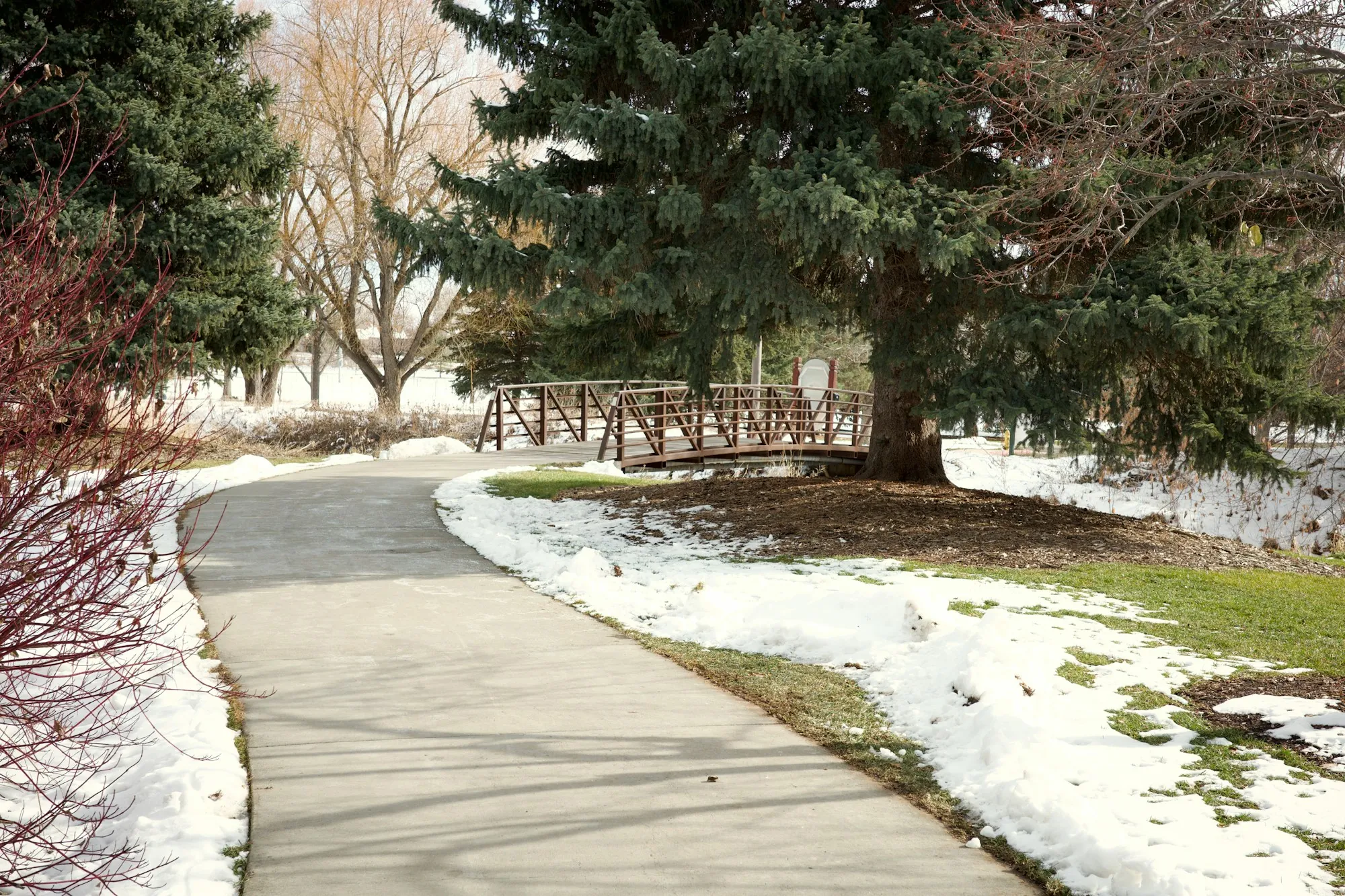
Why Do Old Walks Heave and Tilt?
Walk any older street and you will see it: sidewalk squares lifted at one corner, front walks sloping toward the foundation, sections cracked into pieces where a tree root or a frost heave pushed up. Nearly all of it traces back to what was under the concrete. A walk poured on loose fill or bare clay moves every time the ground freezes and thaws. When we replace a walkway, the old sections are broken out and hauled away, the soil is dug down and replaced with compacted stone, and the boards are pitched slightly to one side so rain spills into the lawn rather than running down the path. The concrete is usually around 4 inches thick, finished with a broom texture for grip and cut with control joints at regular spacing so any shrinkage cracks land in a straight line. Then it gets the same damp, covered cure as everything else we pour. A front walk in Tinley Park sees snow shovels, salt and hard freezes, and this is what lets it shrug them off.
What Comes With a New Walkway?
Whether it is a front walk, a side path or a public-style sidewalk, the work includes these pieces.
Removal of the old walk
Broken or heaved sections cut out and hauled off the property.
Path layout
Width and route marked with you, including any curve toward the porch or gate.
Compacted base
Stone packed in layers so the walk is not riding on soft soil.
Cross-slope
A slight side-to-side fall so water leaves the surface and stays away from the house.
Broom finish
Fine bristle lines dragged across the top so wet soles do not slide.
Tooled edges
Rounded edges that resist chipping from shovels and mowers.
Joint spacing
Control joints placed at even intervals so cracks follow straight lines.
Lawn backfill
Soil filled back along the edges once forms come out so grass meets the walk cleanly.
How Does a Walkway Job Go?
Walk the route
We measure, look at drainage and talk through width and shape. The written price lists removal, base, thickness and finish.
Tear out and prepare
We jackhammer the old sections, dig the route, pack stone and stake boards with a slight side tilt.
Pour, finish and cure
Concrete is placed, broomed, edged and jointed, then kept damp and covered while it hardens before the forms are pulled.
Why Do Our Walks Stay Flat?
Stone under every section
A compacted base is what keeps a walk from rising and sinking with the seasons.
Water leaves the path
The slope sends rain into the grass, not toward your foundation or along the walk.
Cracks in straight lines
Even joint spacing keeps the walk looking neat as it ages.
- Old walk hauled away
- Sloped for runoff
- Broomed for grip
- Edges backfilled
Is Your Front Walk Due for Replacement?
Describe what is there now and where you want the new path to run. We can talk through width, slope and finish on the call.